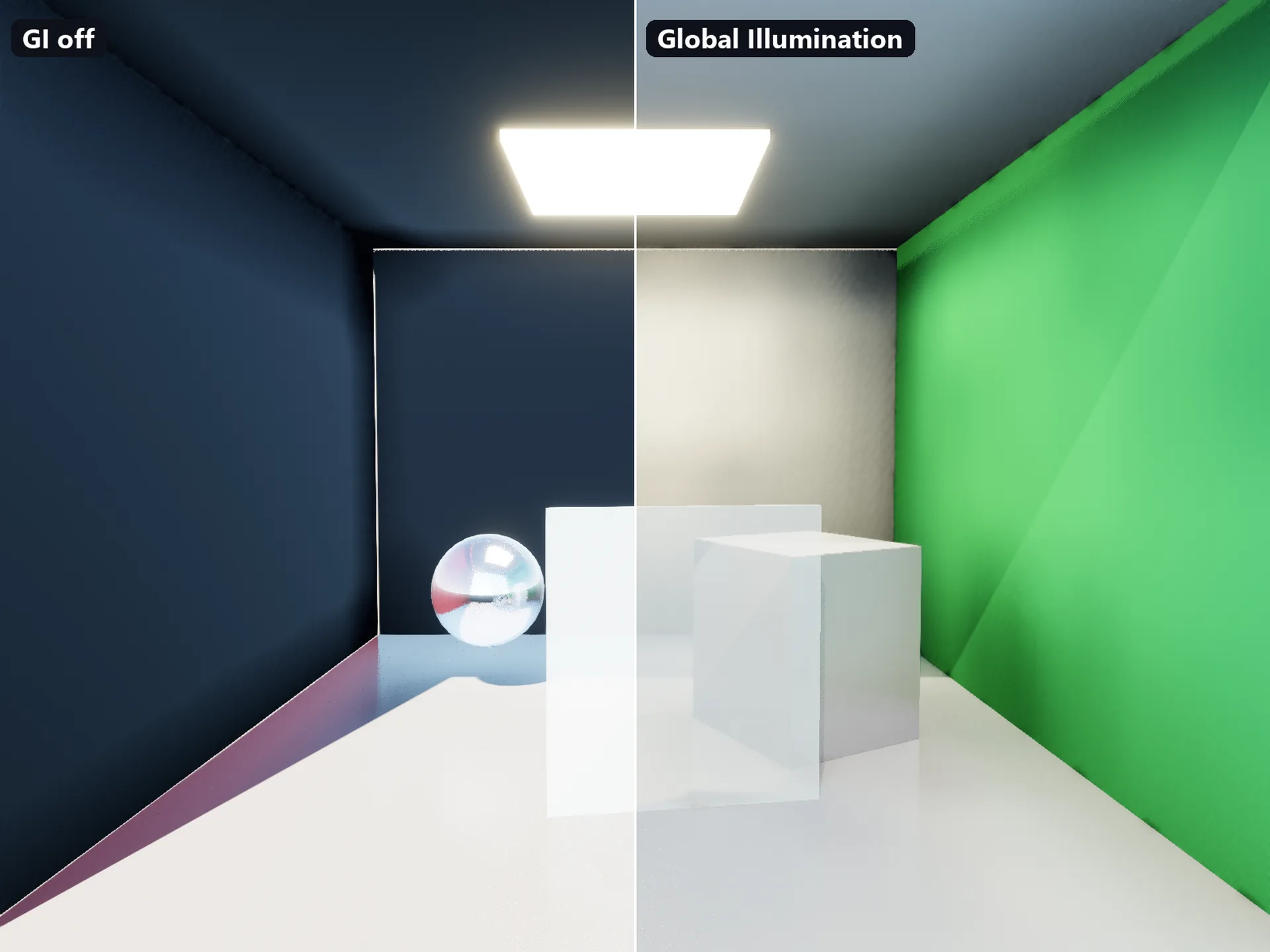
Light that moves with the world.
Global Illumination combines screen-space GI, signed distance fields, DDGI probes, a radiance cache and a surface cache, with a hardware ray-traced gather on capable GPUs. One renderer targets four graphics APIs from a single HLSL shader source.
- Global Illumination real-time, from the Medium quality tier up.
- D3D12, Vulkan, Metal, D3D11 selected per platform at launch, with automatic fallback.
- Five quality tiers Low to Cinematic, with virtual shadow maps and ray-traced reflections and AO at Epic.
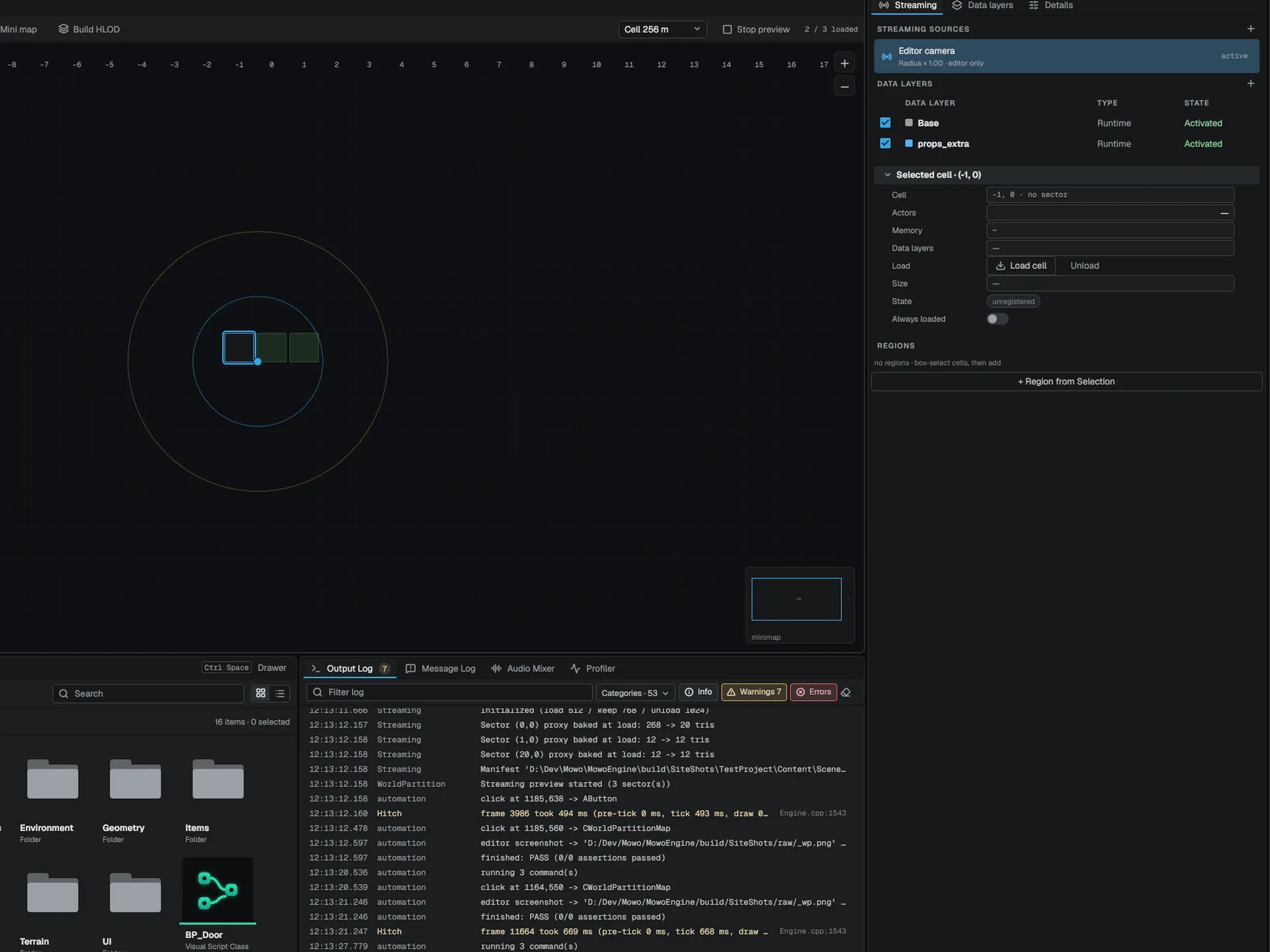
Big worlds, streamed in cells.
World Partition splits a level into a grid of cells that stream in around streaming sources, with HLOD for distant cells. The editor's World Partition panel maps the cell grid while you work, next to terrain, water and foliage tools.
- World Partition cell streaming around streaming sources, with HLOD.
- Terrain, water and foliage sculpt, paint and scatter in the level editor.
- Outliner and Details every actor searchable, every reflected property editable with per-property undo.
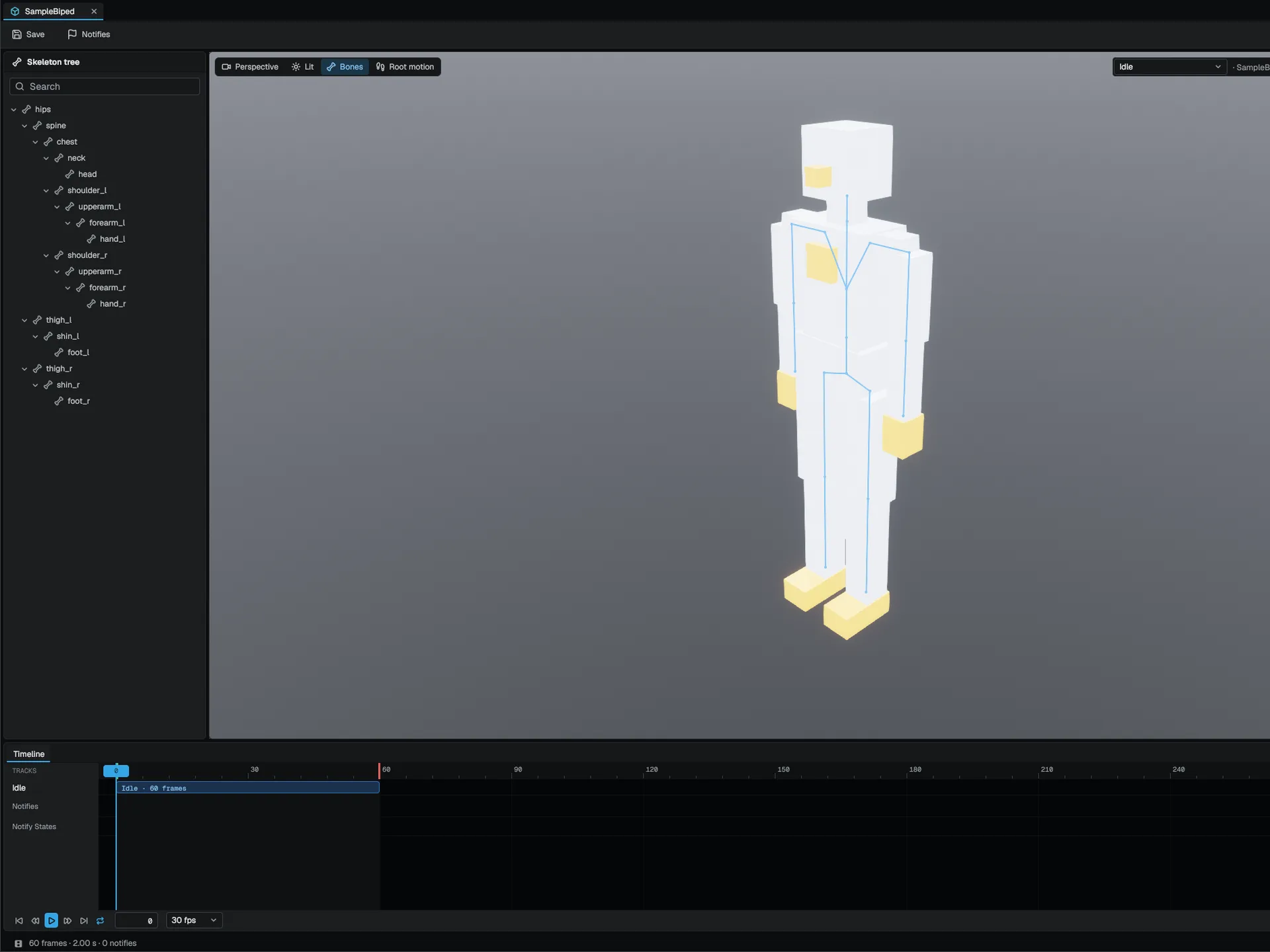
Characters that read well.
Anim graphs with layering, additive poses and aim offsets, 1D and 2D blend spaces, montages with notifies, motion matching and IK drive characters. Jolt handles bodies, constraints, ragdolls and character movement. Sequencer puts cinematics on one timeline.
- Anim graph per-bone layering, additive, aim offset, mirror and cached poses.
- Blend spaces 1D and 2D, edited in their own asset editor.
- Sequencer camera cuts, skeletal, material, property and audio tracks.
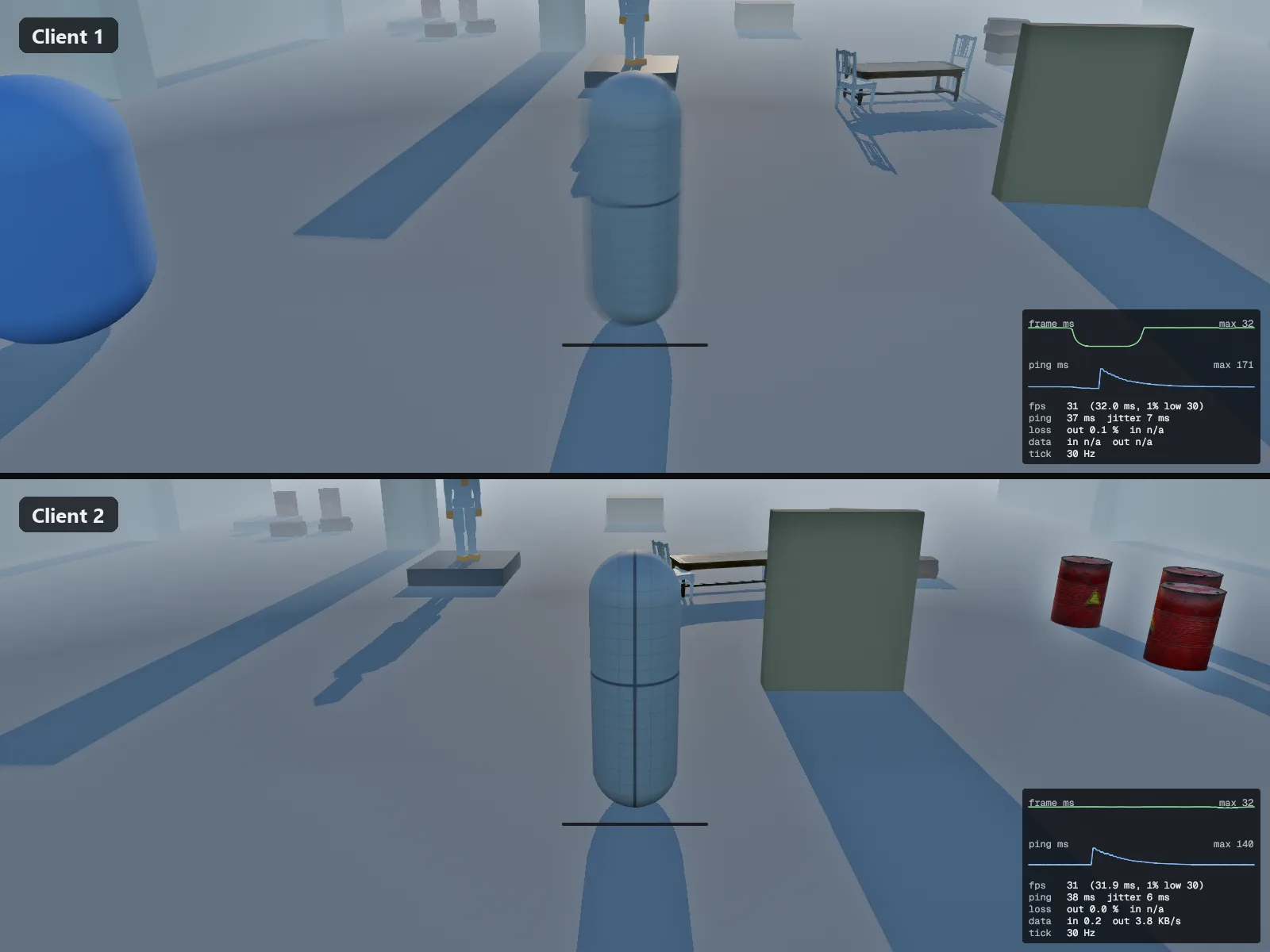
Multiplayer from the first project.
Replication, client prediction and lag compensation are part of the gameplay framework. The ENet transport runs an encrypted channel (X25519 handshake, XChaCha20-Poly1305), and Steam and Discord connect through plugins.
- Steam relay hosting through Steam Datagram Relay with the SteamPlatform plugin.
- Prediction client-side movement with server reconciliation.
- Lag compensation server-side rewind of up to 500 ms for hit validation.
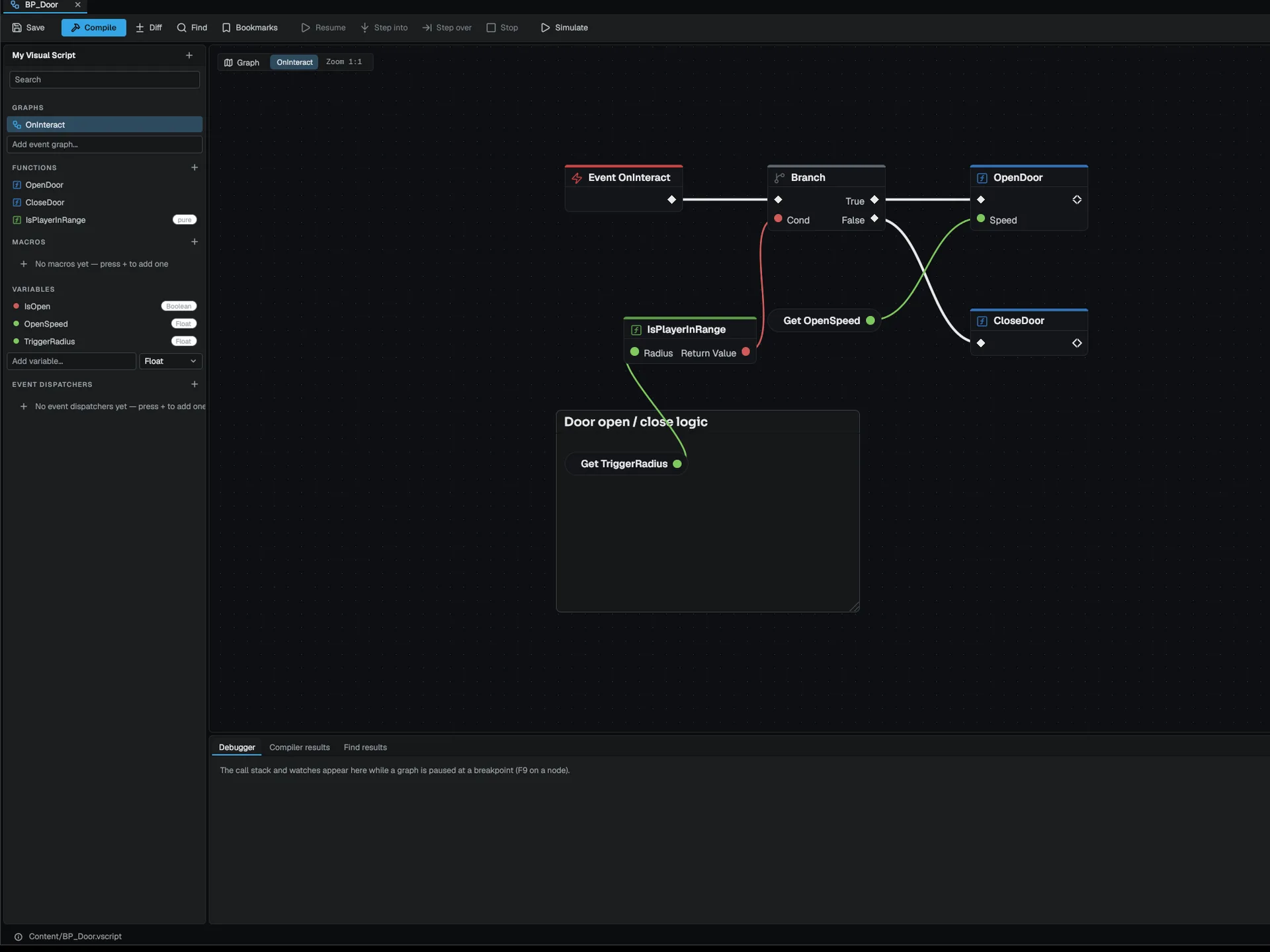
C++ where it counts, Visual Scripting everywhere else.
Write engine modules and gameplay in C++20, or build logic in Visual Scripting graphs with events, functions, macros and dispatchers. Every reflected MFUNCTION is callable from a graph with no glue code.
- Visual Scripting Blueprint-style graphs with breakpoints, stepping and a DAP server.
- C++ game modules hot reload for gameplay code while the editor runs.
- Graph hot reload graphs recompile while live instances keep their state.
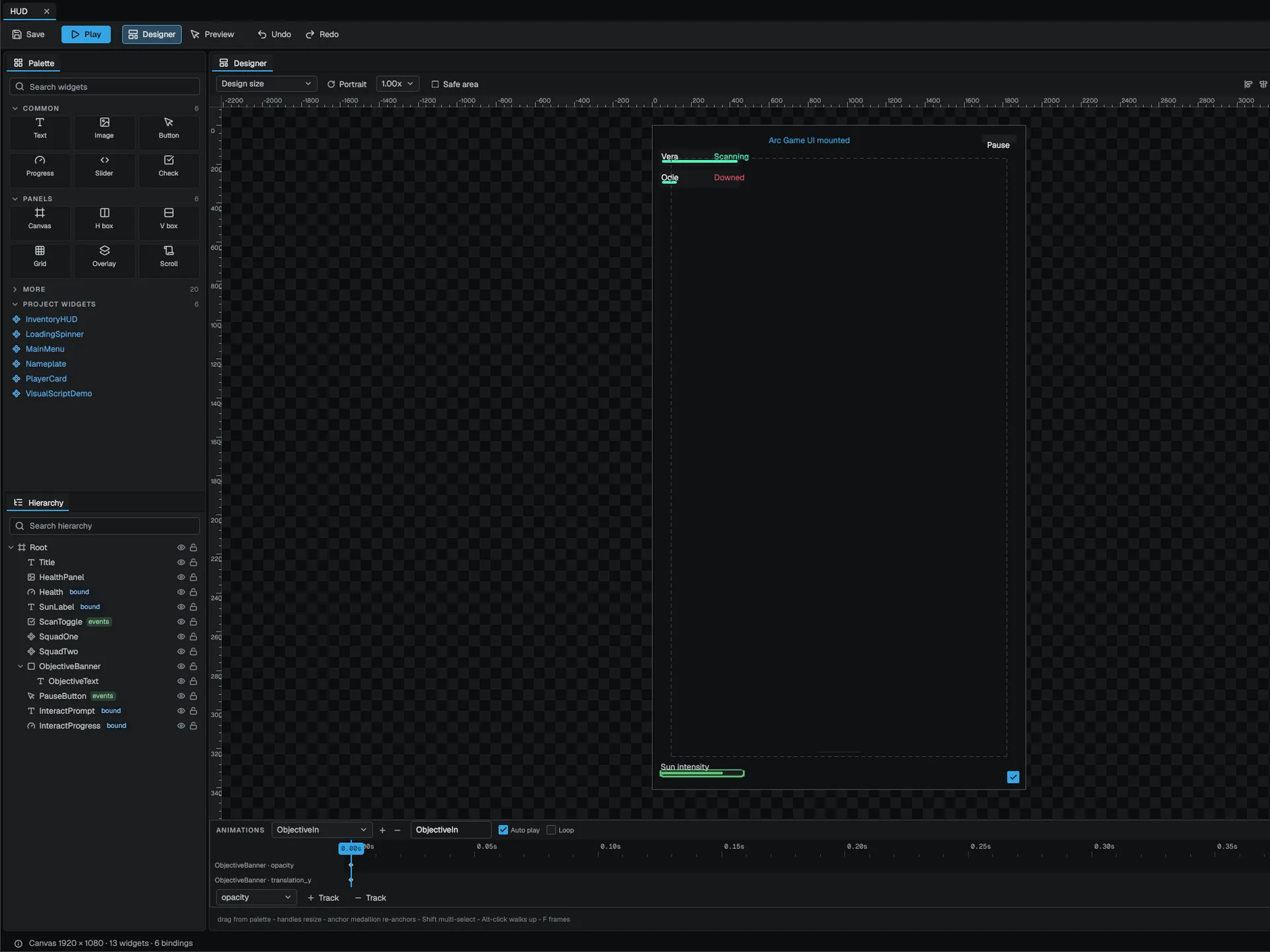
The editor’s UI framework is yours.
Arc draws the editor and ships in your game. ArcUI adds widget-tree assets, a screen stack and bindings, so a widget property can follow a gameplay value or a Visual Scripting expression without extra code.
- Arc one framework for editor tools and in-game UI.
- Bindings properties bound to reflected gameplay values or Visual Scripting.
- Anchors nine anchor presets plus stretch for resolution-independent layout.
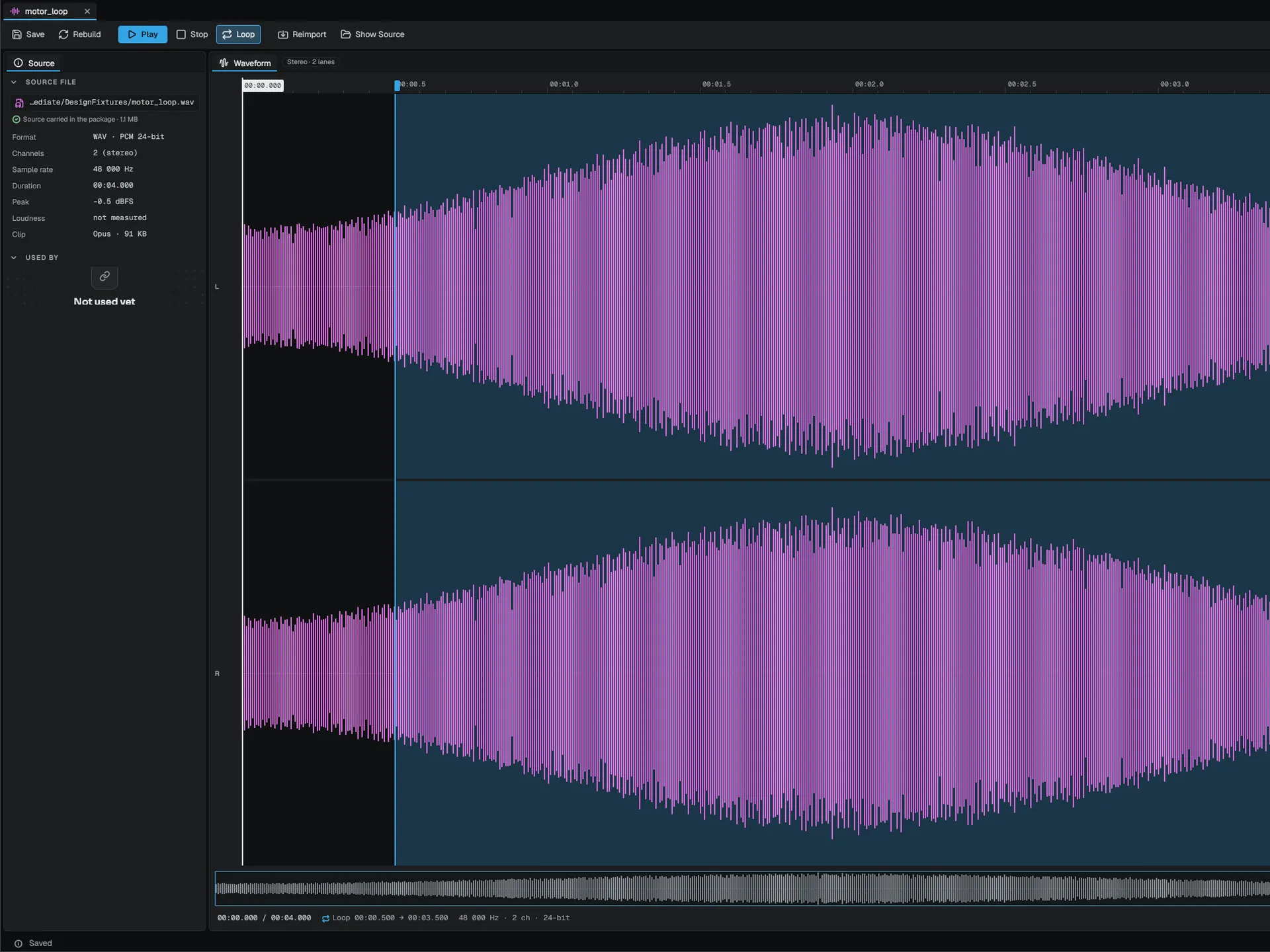
Sound on the same timeline.
Audio runs on miniaudio with five mix buses, a DSP graph, sound cues, adaptive music and mix snapshots. Audio tracks sit in Sequencer next to animation and camera tracks.
- Audio tracks place audio against picture in Sequencer.
- Sound cues and DSP graph build sounds from nodes and effects on each bus.
- Occlusion and reverb raycast occlusion and convolution reverb.
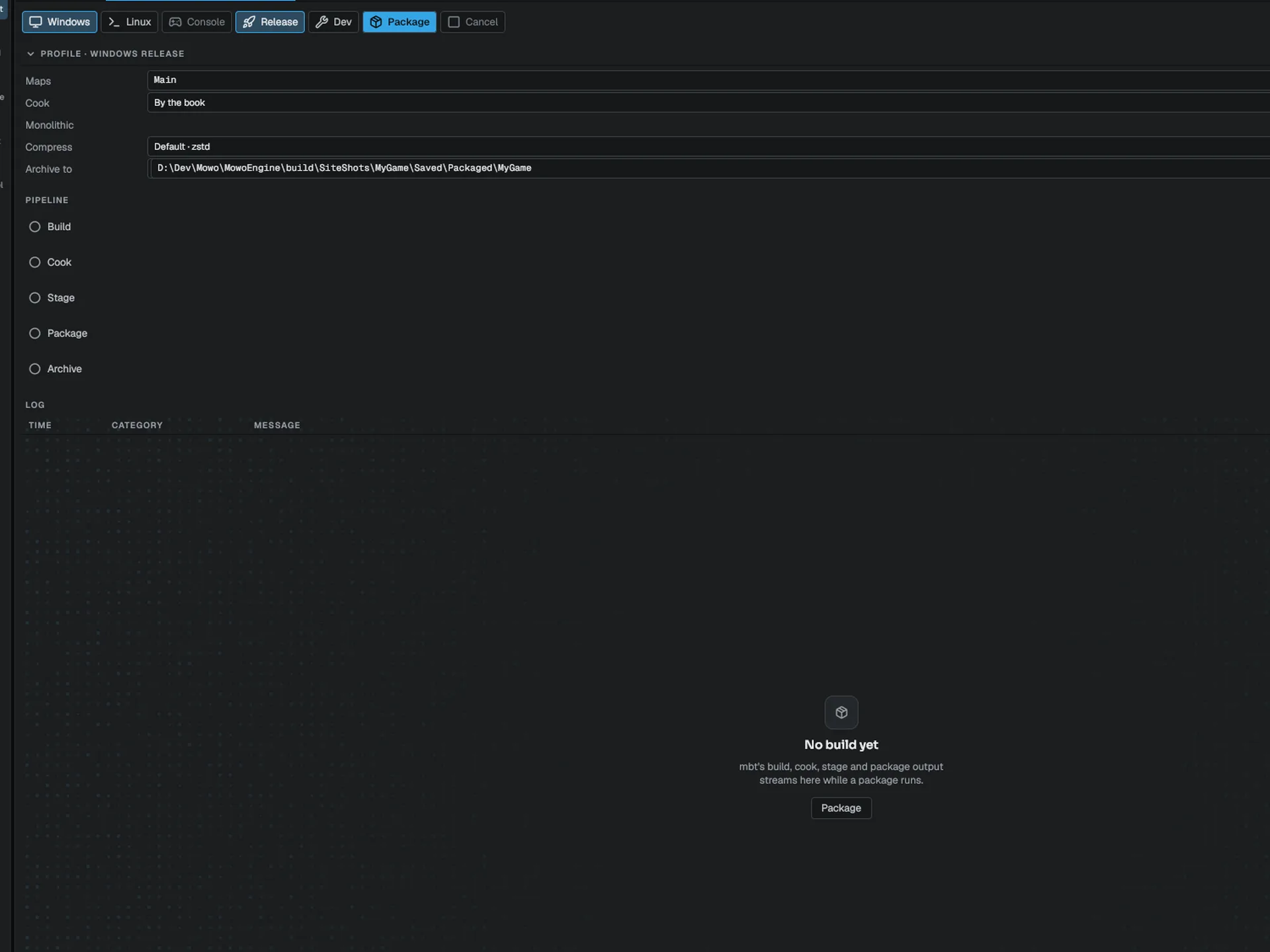
From editor to storefront.
mbt package builds, compiles shaders, cooks and stages each build as a series of visible stages, into encrypted and signed archives. Shipped builds carry a crash reporter, and mbt uploads symbols and Steam depots.
- Packaging pipeline build, shaders, cook, stage and finalize, with installers.
- Encrypted, signed archives MEAF archives with XChaCha20 encryption and EdDSA signatures.
- Crash reporting a separate crash reporter uploads reports; mbt symbols uploads PDBs.